
Netherlands Population: 17,151,228
79 VISITORS FROM HERE!«  Previous Country | Next Country Previous Country | Next Country  » Back to Flag Counter Overview » Back to Flag Counter Overview | 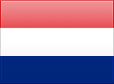 |
| History | |
| The Dutch United Provinces declared their independence from Spain in 1579; during the 17th century, they became a leading seafaring and commercial power, with settlements and colonies around the world. After a 20-year French occupation, a Kingdom of the Netherlands was formed in 1815. In 1830, Belgium seceded and formed a separate kingdom. The Netherlands remained neutral in World War I, but suffered German invasion and occupation in World War II. A modern, industrialized nation, the Netherlands is also a large exporter of agricultural products. The country was a founding member of NATO and the EEC (now the EU) and participated in the introduction of the euro in 1999. In October 2010, the former Netherlands Antilles was dissolved and the three smallest islands - Bonaire, Sint Eustatius, and Saba - became special municipalities in the Netherlands administrative structure. The larger islands of Sint Maarten and Curacao joined the Netherlands and Aruba as constituent countries forming the Kingdom of the Netherlands. In February 2018, the Sint Eustatius island council (governing body) was dissolved and replaced by a government commissioner to restore the integrity of public administration. According to the Dutch Government, the intervention will be as "short as possible and as long as needed." |

|  |
| |
| Geography | |
| |
| Location: | Western Europe, bordering the North Sea, between Belgium and Germany |
| Geographic coordinates: | 52 30 N, 5 45 E |
| Area: | total: 41,543 sq km land: 33,893 sq km water: 7,650 sq km Size comparison: slightly less than twice the size of New Jersey |
| Land Boundaries: | total: 1,053 km border countries (2): Belgium 478 km, Germany 575 km |
| Coastline: | 451 km |
| Maritime claims: | territorial sea: 12 nm contiguous zone: 24 nm exclusive fishing zone: 200 nm |
| Climate: | temperate; marine; cool summers and mild winters |
| Terrain: | mostly coastal lowland and reclaimed land (polders); some hills in southeast |
| Natural resources: | natural gas, petroleum, peat, limestone, salt, sand and gravel, arable land |
| Land use: | agricultural land: 55.1% (2011 est.) arable land: 29.8% (2011 est.) permanent crops: 1.1% (2011 est.) permanent pasture: 24.2% (2011 est.) forest: 10.8% (2011 est.) other: 34.1% (2011 est.) |
| Irrigated land: | 4,860 sq km (2012) |
| Natural hazards: | flooding volcanism: Mount Scenery (887 m), located on the island of Saba in the Caribbean, last erupted in 1640;; Round Hill (601 m), a dormant volcano also known as The Quill, is located on the island of St. Eustatius in the Caribbean;; these islands are at the northern end of the volcanic island arc of the Lesser Antilles that extends south to Grenada |
| Current Environment Issues: | water and air pollution are significant environmental problems; pollution of the country's rivers from industrial and agricultural chemicals, including heavy metals, organic compounds, nitrates, and phosphates; air pollution from vehicles and refining activities |
| International Environment Agreements: | party to: Air Pollution, Air Pollution-Nitrogen Oxides, Air Pollution-Persistent Organic Pollutants, Air Pollution-Sulfur 85, Air Pollution-Sulfur 94, Air Pollution-Volatile Organic Compounds, Antarctic-Environmental Protocol, Antarctic-Marine Living Resources, Antarctic Treaty, Biodiversity, Climate Change, Climate Change-Kyoto Protocol, Desertification, Endangered Species, Environmental Modification, Hazardous Wastes, Law of the Sea, Marine Dumping, Marine Life Conservation, Ozone Layer Protection, Ship Pollution, Tropical Timber 83, Tropical Timber 94, Wetlands, Whaling signed, but not ratified: none of the selected agreements |
| ^Back to Top | |
| People | |
| |
| Nationality: | noun: Dutchman(men), Dutchwoman(women) adjective: Dutch |
| Ethnic groups: | Dutch 76.9%, EU 6.4%, Turkish 2.4%, Moroccan 2.3%, Indonesian 2.1%, German 2.1%, Surinamese 2%, Polish 1%, other 4.8% (2018 est.) |
| Languages: | Dutch (official) note: Frisian is an official language in Fryslan province; Frisian, Low Saxon, Limburgish, Romani, and Yiddish have protected status under the European Charter for Regional or Minority Languages; Dutch is the official language of the three special municipalities of the Caribbean Netherlands; English is a recognized regional language on Sint Eustatius and Saba; Papiamento is a recognized regional language on Bonaire |
| Religions: | Roman Catholic 23.6%, Protestant 14.9% (includes Dutch Reformed 6.4%, Protestant Church of The Netherlands 5.6%, Calvinist 2.9%), Muslim 5.1%, other 5.6% (includes Hindu, Buddhist, Jewish), none 50.7% (2017 est.) |
| Population: | 17,151,228 (July 2018 est.) |
| Age structure: | 0-14 years: 16.28% (male 1,428,837 /female 1,362,686) 15-24 years: 12.03% (male 1,052,357 /female 1,011,710) 25-54 years: 39.18% (male 3,371,698 /female 3,348,595) 55-64 years: 13.41% (male 1,143,824 /female 1,155,751) 65 years and over: 19.1% (male 1,487,278 /female 1,788,492) (2018 est.) |
| Dependency ratios: | total dependency ratio: 53.1 (2015 est.) youth dependency ratio: 25.6 (2015 est.) elderly dependency ratio: 27.4 (2015 est.) potential support ratio: 3.6 (2015 est.) |
| Median age: | total: 42.7 years male: 41.6 years female: 43.8 years (2018 est.) |
| Population growth rate: | 0.38% (2018 est.) |
| Birth rate: | 10.9 births/1,000 population (2018 est.) |
| Death rate: | 9 deaths/1,000 population (2018 est.) |
| Net migration rate: | 1.9 migrant(s)/1,000 population (2018 est.) |
| Urbanization: | urban population: 91.5% of total population (2018) rate of urbanization: 0.74% annual rate of change (2015-20 est.) |
| Major urban areas - population: | 1.132 million AMSTERDAM (capital) 1.008 million Rotterdam (2018) |
| Sex ratio: | at birth: 1.05 male(s)/female 0-14 years: 1.05 male(s)/female 15-24 years: 1.04 male(s)/female 25-54 years: 1.01 male(s)/female 55-64 years: 0.99 male(s)/female 65 years and over: 0.83 male(s)/female total population: 0.98 male(s)/female (2018 est.) Mother's mean age at first birth: 29.6 years (2015 est.) |
| Maternal mortality rate: | 7 deaths/100,000 live births (2015 est.) |
| Infant mortality rate: | total: 3.5 deaths/1,000 live births male: 3.8 deaths/1,000 live births female: 3.3 deaths/1,000 live births (2018 est.) |
| Life expectancy at birth: | total population: 81.5 years male: 79.3 years female: 83.8 years (2018 est.) |
| Total fertility rate: | 1.78 children born/woman (2018 est.) |
| Contraceptive prevalence rate: | 73% (2013) note: percent of women aged 18-45 |
| Physicians density: | 3.51 physicians/1,000 population (2016) |
| Hospital bed density: | 4.7 beds/1,000 population (2009) |
| Drinking water source: | improved: urban: 100% of population rural: 100% of population total: 100% of population unimproved: urban: 0% of population rural: 0% of population total: 0% of population (2015 est.) |
| Sanitation facility access: | improved: urban: 97.5% of population (2015 est.) rural: 99.9% of population (2015 est.) total: 97.7% of population (2015 est.) unimproved: urban: 2.5% of population (2015 est.) rural: 0.1% of population (2015 est.) total: 2.3% of population (2015 est.) |
| HIV/AIDS - adult prevalence rate: | 0.2% (2017 est.) |
| HIV/AIDS - people living with HIV/AIDS: | 23,000 (2017 est.) |
| HIV/AIDS - deaths: | <500 (2017 est.) |
| Obesity - adult prevalence rate: | 20.4% (2016) |
| Education expenditures: | 5.4% of GDP (2015) |
| Literacy: | |
| School life expectancy (primary to tertiary education): | total: 18 years male: 18 years female: 18 years (2016) Unemployment, youth ages 15-24: total: 8.9% male: 9% female: 8.8% (2017 est.) |
| ^Back to Top | |
| Government | |
| |
| Country name: | conventional long form: Kingdom of the Netherlands conventional short form: Netherlands local long form: Koninkrijk der Nederlanden local short form: Nederland abbreviation: NL etymology: the country name literally means "the lowlands" and refers to the geographic features of the land being both flat and down river from higher areas (i.e., at the estuaries of the Scheldt, Meuse, and Rhine Rivers; only about half of the Netherlands is more than 1 meter above sea level) |
| Government type: | parliamentary constitutional monarchy; part of the Kingdom of the Netherlands |
| Capital: | name: Amsterdam; note - The Hague is the seat of government geographic coordinates: 52 21 N, 4 55 E time difference: UTC+1 (6 hours ahead of Washington, DC, during Standard Time) daylight saving time: +1hr, begins last Sunday in March; ends last Sunday in October note: time descriptions apply to the continental Netherlands only, for the constituent countries in the Caribbean, the time difference is UTC-4 etymology: the original Dutch name, Amstellerdam, meaning "a dam on the Amstel River," dates to the 13th century; over time the name simplified to Amsterdam |
| Administrative divisions: | 12 provinces (provincies, singular - provincie); Drenthe, Flevoland, Fryslan (Friesland), Gelderland, Groningen, Limburg, Noord-Brabant (North Brabant), Noord-Holland (North Holland), Overijssel, Utrecht, Zeeland (Zealand), Zuid-Holland (South Holland) note: the Netherlands is one of four constituent countries of the Kingdom of the Netherlands; the other three, Aruba, Curacao, and Sint Maarten, are all islands in the Caribbean; while all four parts are considered equal partners, in practice, most of the Kingdom's affairs are administered by the Netherlands, which makes up about 98% of the Kingdom's total land area and population note: three other Caribbean islands, Bonaire, Sint Eustatius, and Saba, are considered to be special municipalities of the Netherlands proper |
| Dependent areas: | Aruba, Curacao, Sint Maarten |
| Independence: | 23 January 1579 (the northern provinces of the Low Countries conclude the Union of Utrecht breaking with Spain; on 26 July 1581 they formally declared their independence with an Act of Abjuration; however, it was not until 30 January 1648 and the Peace of Westphalia that Spain recognized this independence) |
| National holiday: | King's Day (birthday of King WILLEM-ALEXANDER), 27 April (1967); note - King's or Queen's Day are observed on the ruling monarch's birthday; currently celebrated on 26 April if 27 April is a Sunday |
| Constitution: | history: previous 1597, 1798; latest adopted 24 August 1815 (substantially revised in 1848) amendments: proposed as an "Act of Parliament" by or on behalf of the king or by the Second Chamber of the States General; the Second Chamber is dissolved after its first reading of the "Act"; passage requires a second reading by both the First Chamber and newly elected Second Chamber, followed by at least two-thirds majority vote of both chambers, and ratification by the king; amended many times, last in 2010 (2016) |
| Legal system: | civil law system based on the French system; constitution does not permit judicial review of acts of the States General |
| Suffrage: | 18 years of age; universal |
| Executive branch: | chief of state: King WILLEM-ALEXANDER (since 30 April 2013); Heir Apparent Princess Catharina-Amalia (daughter of King WILLEM-ALEXANDER, born 7 December 2003) head of government: Prime Minister Mark RUTTE (since 14 October 2010; Deputy Prime Ministers (since 26 October 2017) Hugo DE JONGE, Karin Kajsa OLLONGREN, and Carola SCHOUTEN (since 26 October 2017); note - Mark RUTTE heads his third cabinet put in place since 26 October 2017 cabinet: Council of Ministers appointed by the monarch elections/appointments: the monarchy is hereditary; following Second Chamber elections, the leader of the majority party or majority coalition is usually appointed prime minister by the monarch; deputy prime ministers are appointed by the monarch |
| Legislative branch: | description: bicameral States General or Staten Generaal consists of: First Chamber or Eerste Kamer (75 seats; members indirectly elected by the country's 12 provincial council members by proportional representation vote; members serve 4-year terms) Second Chamber or Tweede Kamer (150 seats; members directly elected in multi-seat constituencies by proportional representation vote to serve up to 4-year terms) elections: First Chamber - last held on 26 May 2015 (next to be held on 27 May 2019) Second Chamber - last held on 15 March 2017 (next to be held 15 March 2021) election results: First Chamber - percent of vote by party - NA; seats by party - VVD 13, CDA 12, D66 10, PVV 9, SP 9, PvdA 8, GL 4, CU 3, other 7; composition - men 49, women 26, percent of women 34.7% Second Chamber - percent of vote by party - VVD 21.3%, PVV 13.1%, CDA 12.4%, D66 12.2%, GL 9.1%, SP 9.1%, PvdA 5.7%, CU 3.4%, PvdD 3.2%, 50 Plus 3.1%, other 7.4%; seats by party - VVD 33, PVV 20, CDA 19, D66 19, GL 14, SP 14, PvdA 9, CU 5, PvdD 5, 50 Plus 4, other 8; composition - men 96, women 54, percent of women 36%; note - total States General percent of women 35.6% |
| Judicial branch: | highest courts: Supreme Court or Hoge Raad (consists of 41 judges: the president, 6 vice presidents, 31 justices or raadsheren, and 3 justices in exceptional service, referred to as buitengewone dienst); the court is divided into criminal, civil, tax, and ombuds chambers judge selection and term of office: justices appointed by the monarch from a list provided by the Second Chamber of the States General; justices appointed for life or until mandatory retirement at age 70 subordinate courts: courts of appeal; district courts, each with up to 5 subdistrict courts; note in December 2018, the Dutch Senate approved a bill to establish the Netherlands Commercial Court for international trade disputes with the Netherlands |
| Political parties and leaders: | Christian Democratic Appeal or CDA [Sybrand VAN HAERSMA BUMA] Christian Union or CU [Gert-Jan SEGERS] Democrats 66 or D66 [Rob JETTEN] Denk [Tunahan KUZU] 50 Plus [Henk KROL] Forum for Democracy or FvD [Thierry BAUDET] Green Left or GL [Jesse KLAVER] Labor Party or PvdA [Lodewijk ASSCHER] Party for Freedom or PVV [Geert WILDERS] Party for the Animals or PvdD [Marianne THIEME] People's Party for Freedom and Democracy or VVD [Mark RUTTE] Reformed Political Party or SGP [Kees VAN DER STAAIJ] Socialist Party or SP [Emile ROEMER] plus a few minor parties |
| International organization participation: | ADB (nonregional member), AfDB (nonregional member), Arctic Council (observer), Australia Group, Benelux, BIS, CBSS (observer), CD, CE, CERN, EAPC, EBRD, ECB, EIB, EITI (implementing country), EMU, ESA, EU, FAO, FATF, G-10, IADB, IAEA, IBRD, ICAO, ICC (national committees), ICCt, ICRM, IDA, IEA, IFAD, IFC, IFRCS, IGAD (partners), IHO, ILO, IMF, IMO, IMSO, Interpol, IOC, IOM, IPU, ISO, ITSO, ITU, ITUC (NGOs), MIGA, MINUSMA, NATO, NEA, NSG, OAS (observer), OECD, OPCW, OSCE, Pacific Alliance (observer), Paris Club, PCA, Schengen Convention, SELEC (observer), UN, UNCTAD, UNDOF, UNESCO, UNHCR, UNIDO, UNMISS, UNRWA, UN Security Council (temporary), UNTSO, UNWTO, UPU, WCO, WHO, WIPO, WMO, WTO, ZC |
| National symbol(s): | lion, tulip; national color: orange |
| National anthem: | name: "Het Wilhelmus" (The William) lyrics/music: Philips VAN MARNIX van Sint Aldegonde (presumed)/unknown note: adopted 1932, in use since the 17th century, making it the oldest national anthem in the world; also known as "Wilhelmus van Nassouwe" (William of Nassau), it is in the form of an acrostic, where the first letter of each stanza spells the name of the leader of the Dutch Revolt |
| Diplomatic representation in the US: | chief of mission: Ambassador Hendrik Jan Jurriaan SCHUWER (since 17 September 2015) chancery: 4200 Linnean Avenue NW, Washington, DC 20008 telephone: [1] (202) 244-5300, [1] 877-388-2443 FAX: [1] (202) 362-3430 consulate(s) general: Chicago, Miami, New York, San Francisco |
| Diplomatic representation from the US: | chief of mission: Ambassador Peter HOEKSTRA (since 10 January 2018) embassy: John Adams Park 1, 2244 BZ Wassenaar mailing address: PSC 71, Box 1000, APO AE 09715 telephone: [31] (70) 310-2209 FAX: [31] (70) 310-2207 consulate(s) general: Amsterdam |
| ^Back to Top | |
| Economy | |
The Netherlands, the sixth-largest economy in the European Union, plays an important role as a European transportation hub, with a consistently high trade surplus, stable industrial relations, and low unemployment. Industry focuses on food processing, chemicals, petroleum refining, and electrical machinery. A highly mechanized agricultural sector employs only 2% of the labor force but provides large surpluses for food-processing and underpins the country’s status as the world’s second largest agricultural exporter. The Netherlands is part of the euro zone, and as such, its monetary policy is controlled by the European Central Bank. The Dutch financial sector is highly concentrated, with four commercial banks possessing over 80% of banking assets, and is four times the size of Dutch GDP. In 2008, during the financial crisis, the government budget deficit hit 5.3% of GDP. Following a protracted recession from 2009 to 2013, during which unemployment doubled to 7.4% and household consumption contracted for four consecutive years, economic growth began inching forward in 2014. Since 2010, Prime Minister Mark RUTTE’s government has implemented significant austerity measures to improve public finances and has instituted broad structural reforms in key policy areas, including the labor market, the housing sector, the energy market, and the pension system. In 2017, the government budget returned to a surplus of 0.7% of GDP, with economic growth of 3.2%, and GDP per capita finally surpassed pre-crisis levels. The fiscal policy announced by the new government in the 2018-2021 coalition plans for increases in government consumption and public investment, fueling domestic demand and household consumption and investment. The new government’s policy also plans to increase demand for workers in the public and private sector, forecasting a further decline in the unemployment rate, which hit 4.8% in 2017. | |
| GDP (purchasing power parity): | $924.4 billion (2017 est.) $898.6 billion (2016 est.) $879.4 billion (2015 est.) note: data are in 2017 dollars |
| GDP (official exchange rate): | $832.2 billion (2017 est.) |
| GDP - real growth rate: | 2.9% (2017 est.) 2.2% (2016 est.) 2% (2015 est.) |
| GDP - per capita (PPP): | $53,900 (2017 est.) $52,800 (2016 est.) $51,900 (2015 est.) note: data are in 2017 dollars |
| Gross national saving: | 31.2% of GDP (2017 est.) 28.5% of GDP (2016 est.) 28.8% of GDP (2015 est.) GDP - composition, by end use: household consumption: 44.3% (2017 est.) government consumption: 24.2% (2017 est.) investment in fixed capital: 20.5% (2017 est.) investment in inventories: 0.2% (2017 est.) exports of goods and services: 83% (2017 est.) imports of goods and services: -72.3% (2017 est.) GDP - composition, by sector of origin: agriculture: 1.6% (2017 est.) industry: 17.9% (2017 est.) services: 70.2% (2017 est.) |
| Agriculture - products: | vegetables, ornamentals, dairy, poultry and livestock products; propagation materials |
| Industries: | agroindustries, metal and engineering products, electrical machinery and equipment, chemicals, petroleum, construction, microelectronics, fishing |
| Industrial production growth rate: | 3.3% (2017 est.) |
| Labor force: | 7.969 million (2017 est.) |
| Labor force - by occupation: | agriculture: 1.2% industry: 17.2% services: 81.6% (2015 est.) |
| Unemployment rate: | 4.9% (2017 est.) 6% (2016 est.) |
| Population below poverty line: | 8.8% (2015 est.) |
| Household income or consumption by percentage share: | lowest 10%: 2.3% highest 10%: 24.9% (2014 est.) |
| Distribution of family income - Gini index: | 30.3 (2015 est.) 25.1 (2013 est.) |
| Budget: | revenues: 361.4 billion (2017 est.) expenditures: 352.4 billion (2017 est.) |
| Taxes and other revenues: | 43.4% (of GDP) (2017 est.) Budget surplus (+) or deficit (-): 1.1% (of GDP) (2017 est.) |
| Public debt: | 56.5% of GDP (2017 est.) 61.3% of GDP (2016 est.) note: data cover general government debt and include debt instruments issued (or owned) by government entities other than the treasury; the data include treasury debt held by foreign entities; the data include debt issued by subnational entities, as well as intragovernmental debt; intragovernmental debt consists of treasury borrowings from surpluses in the social funds, such as for retirement, medical care, and unemployment, debt instruments for the social funds are not sold at public auctions |
| Fiscal year: | calendar year |
| Inflation rate (consumer prices): | 1.3% (2017 est.) 0.1% (2016 est.) |
| Current account balance: | $87.46 billion (2017 est.) $62.92 billion (2016 est.) |
| Exports: | $555.6 billion (2017 est.) $495.4 billion (2016 est.) |
| Exports - commodities: | machinery and transport equipment, chemicals, mineral fuels; food and livestock, manufactured goods |
| Exports - partners: | Germany 24.2%, Belgium 10.7%, UK 8.8%, France 8.8%, Italy 4.2% (2017) |
| Imports: | $453.8 billion (2017 est.) $402.9 billion (2016 est.) |
| Imports - commodities: | machinery and transport equipment, chemicals, fuels, foodstuffs, clothing |
| Imports - partners: | China 16.4%, Germany 15.3%, Belgium 8.5%, US 6.9%, UK 5.1%, Russia 4.3% (2017) |
| Reserves of foreign exchange and gold: | $38.44 billion (31 December 2017 est.) $38.21 billion (31 December 2015 est.) |
| Debt - external: | $4.063 trillion (31 December 2016 est.) $4.054 trillion (31 December 2015 est.) |
| Stock of direct foreign investment - at home: | $5.499 trillion (31 December 2017 est.) $4.759 trillion (31 December 2016 est.) |
| Stock of direct foreign investment - abroad: | $6.579 trillion (31 December 2017 est.) $5.623 trillion (31 December 2016 est.) |
| Market value of publicly traded shares: | $652.7 billion (31 December 2015 est.) $735.1 billion (31 December 2014 est.) $675 billion (31 December 2013 est.) |
| Exchange rates: | euros (EUR) per US dollar - 0.885 (2017 est.) 0.903 (2016 est.) 0.9214 (2015 est.) 0.885 (2014 est.) 0.7634 (2013 est.) |
| ^Back to Top | |
| Energy | |
| |
| Electricity - production: | 109.3 billion kWh (2016 est.) |
| Electricity - consumption: | 108.8 billion kWh (2016 est.) |
| Electricity - exports: | 19.34 billion kWh (2016 est.) |
| Electricity - imports: | 24.26 billion kWh (2016 est.) |
| Electricity - installed generating capacity: | 34.17 million kW (2016 est.) |
| Electricity - from fossil fuels: | 75% of total installed capacity (2016 est.) |
| Electricity - from nuclear fuels: | 1% of total installed capacity (2017 est.) |
| Electricity - from hydroelectric plants: | 0% of total installed capacity (2017 est.) |
| Electricity - from other renewable sources: | 23% of total installed capacity (2017 est.) |
| Crude oil - production: | 18,170 bbl/day (2017 est.) |
| Crude oil - exports: | 7,984 bbl/day (2017 est.) |
| Crude oil - imports: | 1.094 million bbl/day (2017 est.) |
| Crude oil - proved reserves: | 81.13 million bbl (1 January 2018 est.) |
| Refined petroleum products - production: | 1.282 million bbl/day (2017 est.) |
| Refined petroleum products - consumption: | 954,500 bbl/day (2017 est.) |
| Refined petroleum products - exports: | 2.406 million bbl/day (2017 est.) |
| Refined petroleum products - imports: | 2.148 million bbl/day (2017 est.) |
| Natural gas - production: | 45.33 billion cu m (2017 est.) note: the Netherlands has curbed gas production due to seismic activity in the province of Groningen, largest source of gas reserves |
| Natural gas - consumption: | 43.38 billion cu m (2017 est.) |
| Natural gas - exports: | 51.25 billion cu m (2017 est.) |
| Natural gas - imports: | 51 billion cu m (2017 est.) |
| Natural gas - proved reserves: | 801.4 billion cu m (1 January 2018 est.) |
| Carbon dioxide emissions from consumption of energy: | 250.2 million Mt (2017 est.) |
| ^Back to Top | |
| Communications | |
| |
| Cellular Phones in use: | total subscriptions: 20.532 million subscriptions per 100 inhabitants: 120 (2017 est.) |
| Telephone system: | general assessment: highly developed and well maintained; while fixed-line voice market is in decline the VoIP (voice over Internet protocal) and mobile platforms advance; one of the highest fixed broadband penetration rates in the world; government investments; preparations for 5G trials, plans for 3G network shutdown in 2022; LTE-A services; MNOs and banks launch m-payments system (2018) domestic: extensive fixed-line, fiber-optic network; large cellular telephone system with five major operators utilizing the third generation of the Global System for Mobile Communications technology; one in five households now use Voice over the Internet Protocol services; fixed-line 38 per 100 and mobile-cellular 120 per 100 persons (2018) international: country code - 31; submarine cables provide links to the US and Europe; satellite earth stations - 5 (3 Intelsat - 1 Indian Ocean and 2 Atlantic Ocean, 1 Eutelsat, and 1 Inmarsat (2011) |
| Broadcast media: | more than 90% of households are connected to cable or satellite TV systems that provide a wide range of domestic and foreign channels; public service broadcast system includes multiple broadcasters, 3 with a national reach and the remainder operating in regional and local markets; 2 major nationwide commercial television companies, each with 3 or more stations, and many commercial TV stations in regional and local markets; nearly 600 radio stations with a mix of public and private stations providing national or regional coverage |
| Internet country code: | .nl |
| Internet users: | total: 15,385,203 percent of population: 90.4% (July 2016 est.) |
| ^Back to Top | |
| Transportation | |
| |
| Airports: | 29 (2013) |
| Airports (paved runways): | total 23 (2017) over 3,047 m: 3 (2017) 2,438 to 3,047 m: 11 (2017) 1,524 to 2,437 m: 1 (2017) 914 to 1,523 m: 6 (2017) under 914 m: 2 (2017) |
| Airports (unpaved runways): | total 6 (2013) 914 to 1,523 m: 4 (2013) under 914 m: 2 (2013) |
| Heliports: | 1 (2013) |
| Pipelines: | 14000 km gas, 2500 km oil and refined products, 3000 km chemicals (2016) |
| Railways: | total 3,058 km (2016) standard gauge: 3,058 km 1.435-m gauge (2,314 km electrified) (2016) |
| Roadways: | total 139,124 km (includes 3,654 km of expressways) (2016) |
| Waterways: | 6,237 km (navigable by ships up to 50 tons) (2012) |
| Merchant marine: | total 1,233 by type: bulk carrier 13, container ship 41, general cargo 586, oil tanker 21, other 572 (2018) |
| Ports and terminals: | major seaport(s): IJmuiden, Vlissingen container port(s) (TEUs): Rotterdam (13,734,000) (2017) LNG terminal(s) (import): Rotterdam river port(s): Amsterdam (Nordsee Kanaal); Moerdijk (Hollands Diep River); Rotterdam (Rhine River); Terneuzen (Western Scheldt River) |
| ^Back to Top | |
| Military | |
| |
| Military branches: | Royal Netherlands Army, Royal Netherlands Navy (includes Naval Air Service and Marine Corps), Royal Netherlands Air Force (Koninklijke Luchtmacht, KLu), Royal Marechaussee (Military Police) (2015) |
| Military service age and obligation: | 17 years of age for an all-volunteer force (2014) |
| Military expenditures: | 1.35% of GDP (2018) 1.16% of GDP (2017) 1.15% of GDP (2016) 1.2% of GDP (2015) 1.15% of GDP (2014) |
| ^Back to Top | |
| Transnational Issues | |
| |
| Disputes - International: | none |
| Refugees and internally displaced persons: | refugees (country of origin): 32,092 (Syria), 15,478 (Somalia), 14,931 (Eritrea), 9,259 (Iraq), 6,267 (Afghanistan) (2017) stateless persons: 1,951 (2018) |
| Illicit drugs: | major European producer of synthetic drugs, including ecstasy, and cannabis cultivator; important gateway for cocaine, heroin, and hashish entering Europe; major source of US-bound ecstasy and a significant consumer of ecstasy; a large financial sector vulnerable to money laundering |
| ^Back to Top | |
«
Previous Country | Next Country » Back to Flag Counter OverviewSource: CIA - The World Factbook